INDIGENOUS KNOWLEDGE & GOVERNANCE RECOVERY

Thursday, March 29, 2012

Assimilating the Masses? Tejano History Without Indigenous Peoples

RESPONSE TO "Tejano Monument Supporters Faced Questions," Austin American Statesman, March 28, 2012.

While it is important to challenge the Texas Creation Myth (Pioneer version) and its erasure of the historical, documented, and inherent relationship between Indigenous peoples and the land in Texas, (and the Tejano monument movement is a welcome interruption to the dominant project), it is also important that we challenge the rhetoric and discourses of "conquering history" (Antonia Castaneda) within the dominant construction of Tejano history.  A rigorous engagement with multi-plural realities, multiple interest groups, the pattern of violent assimilation and the rise of a highly stratified (classed) society among Tejanos on the land needs close attention.  The current-day memorialization of  the Tejano experience offers an opportunity to re-think and re-examine South Texas' and the Texas-Mexico border peoples' histories with current-day lenses and tools.  From an Indigenous lense, I wonder... in what ways did Indigenous peoples of mixed ancestry find it useful to build a coalitional land-based identity in resistance against Anglo-American cultivator-settlers?  From an Indigenous view, the Tejano identity is an umbrella in which many Indigenous peoples with mixed ancestry have come underneath out from storms, and then left at different times in history.

Tejano identity has been fluid, not fixed, for Indigenous peoples undergoing violent displacements and being incorporated into labor pools for the elites.

It is important to look closely at the forces of assimilation among a very diverse Indigenous world along the Lower Rio Grande in the 18th, 19th, and 20th centuries, experiencing the crushing force of assimilation and criminalization by settlers--the most powerful interest group.

At different times, Tejano elites have worked alongside Indigenous resisters against Anglo-American settlement, and at other times Tejano elites built their identity and culture in competition to Anglo-American cultivators by the adoption of the oppressors' tools.  Tejano elites are implicated in establishing their foothold on the land through the coerced and forced assimilation of Indigenous peoples. 

We should ask: who gets to construct Tejano history today?  Who specifically does the current version serve?  Why is the Anglo-dominant political interest group offering concession to Tejanos now?  What does this have to do with land development and partnerships related to oil, water, and uranium development in South Texas?  And, most importantly, who does this model of public history leave out? 

The Tejano monument is not really progressive or radical. Rather, it mimicks that which it purports to be challenging

True, the Tejano monument is a change that opens up a space in a very uniform field of historical interpretation which has, in Texas, been overly dominated (and thus, censored) by the White Anglo-Christian pioneer narrative.

On the other hand, the current construction of Tejano public history could take on more layers with a social justice lens that includes and educates about the realities of colonialism, genocide, gender violence, racism and a racially stratified society.  This is the version that Indigenous peoples and peoples of mixed ancestry could recognize and see themselves within.  This is the one which persists in Texas.  At the center of a Tejano history with a social justice lense would be the central issue of land, dispossession, capitalism, and that peoples who identify as Tejanos --past and present-- have had a role in the dispossession and violent impoverishment of Indigenous peoples.  

A critical human geography and critical race approach to public history could help to curb the trimmed down perspective of Tejano history that the more patriarchal, linear, and overly romantic (read: 'positive') versions tend to perpetuate.  Not denying the reality of multiple Tejano histories, raced, classed, gendered, stratified:  a Tejano-Tejana-Indigenous-European complex ancestry--that was and is a story of genocide denial--would be a truely valuable and humane contribution to contemporary Texas societies. 

Further, a narrative that reflects the processes of Tejano history making--with a realistic representation of their role in colonization, and one contested by Indigenous peoples, past and present--would be a valued, cutting edge model of public history in a contemporary world.

Unfortunately, the Tejano monument the public is receiving, and the media discourses surrounding its birth, is not cutting edge.  It is more of the same, in a multicultural model that is practicing covert racism and genocide against current-day Indigenous peoples who are the land owners muted in this neoliberal Tejano Creation Myth--without Indigenous peoples. 

When powerful interest groups within the settler society continue to negate the existence and presence of Indigenous peoples, upon whose lands their success is made possible, then public history becomes an issue of human rights, the right of Indigenous peoples to challenge racist public education poliices, and an issue of the mental health of the Indigenous child, woman, man, family, and community.  Ongoing denial of Indigenous presence and realities in Texas public history is a collective health crisis for Indigenous peoples.

It is important to re-think what 'Tejano' meant in the 18th and 19th, and 20th centuries, and what this identity has evolved into in the 21st century-- as more and more Indigenous peoples in Texas act out their oppression by negating their Indigenous culture and to assimilate to 'Hispanic' or 'Tejano' identity.  This problem of denying Indigeneity is a reflection of past and contemporary economics, politics, and authoritarian governance, and the legacy of criminalizing Indigenous cultures in Texas.  Internalizing public denial and negation of Indigeneity is a public health crisis for Texas Indigenous communities.  Challenging this covert and overt form of racism against the idea and reality of Indigeneity is deeply woven into the process of identity formation in Texas.  Idenity and culture are key mental health issues for Indigenous peoples in Texas, and public history should reflect, respect and meaningfully engage with our Indigenous experiences and world views.

Undoubtedly, the Tejano monument deserves a far more complex public debate with more Indigenous peoples voicing their perspectives. 

One thing is certain, in the case of South Texas, few peoples can truly claim a so-called 'pure' Spanish ancestry.  In actuality, as a result of the mission, military, mining, ranching, cultivating, and land dispossession approaches to Indigenous resistances to colonization, there was a great deal of segregating and within sites of crisis (prisons, mines, missions, presidios, ranches, agricultural fields...) the oppressed did align and rebel together.  From anti-oppression resistances, and as a result of violent coercion, Indigenous peoples offered an alternative world view and experience of life to peoples undergoing violent colonization and assimilation.  Indigenous peoples offered a different physical and spiritual reality, and thus, due to alliances across oppressed groups in South Texas and the Texas-Mexico border states, there was extensive inter-mixing between poor Basques, other Spanish speaking Europeans, African slaves, and a majority Indigenous population.  What many Mexican-Americans, Hispanics, and yes, even Tejanos have come to believe are 'Spanish' cultural world-views, are in fact deeply owing to Lipan Apache, Jumano, Nahua, Tlaxcalteca, Coahuiltec, Comanche, and Mescalero world views and knowledege systems.  Layered myths, transferred as a technology of negating Indigenous knowledge, doesn't add up for Lipan Apache hereditary leader, Steven Fernandez Falcon.  Falcon challenges naming traditions among colonizers in Texas which displaces Indigenous knowledge, languages, place-names, and systems.  Falcon argues, "The biggest myth is how Texas got it's name; I've seen it said it was Spanish, others [say] it was Caddo [word], or just an Indian word. Most do not realize it is a name of a Wichita band called the TEYAS who roamed in Central Texas, and their name literally translated into "ally" not "friend." So calling one self a "Tejano" is identifying yourself as a member of the Wichita and not as a Texan or Texas descendant."

Indigenous views contradict and puncture the romantic.  Indigenous knowledge keepers, those like Falcon, who carry forth knowledge disseminated intergenerationally, across the majority of the counties of the lands where current-day Tejanos claim place, underscores the reality that we didn't disappear, we persisted, we are recovering, and that our memory and knowledge systems are resilient.  Then, memory is political as well, and has legal ramifications for Indigenous peoples seeking redress, restitution, and reparation.

Recognition to Indigenous peoples, for the all-important social survival exchanges offered to non-Indigenuos peoples in their daily interactions on our lands, in addition to the central role of economic trade, which infused Indigenous and non-Indigenous trans-cultural paths of thinking and being--is key to recovery and repair.  

Indigeneity has been deeply stitched into the non-Indigenous peoples consciousness in their every day existences.  At the same time, violence and conflict-ridden exchanges between colonists and the colony's oppressed peoples has continued to divide current-day Tejanos and Indigenous peoples--in the shadows of old and new monuments laying claims to pioneering histories.
Without doubt, Indigenous peoples, our lands, and our planned-for assimilation (into disappearance!) has always been at the foundation of all South Texas and Texas-Mexico border lands colonizing cultures.  Indigenous peoples give shape, influence, and dynamically form alternative world views which challenge the normative version of Tejano culture.

The silence about this core social, economic, and political reality, is a censorship about the base formation of power, domination, and subordination in the intimate relationships forged on the land in South Texas and in the Lower Rio Grande Valley.  

Silence on this issue, in public memory and public debates, serves to obscure and negate the current-day reality of Indigenous peoples' struggles for self-determination, Federal Recognition, autonomy, redress, restitution, and Truth Commissions on a variety of issues related to land and resources. 

It is important to not reject--as does the pioneer linear narrative--the central place and role of Indigenous peoples of Texas and northeastern Mexico--especially South Texas and the Texas-Mexico border region.  Of course, we did not vanish, did not disappear, or fully assimilate.  Rather, we adapted to radical changes.  As evidenced in the many Indigenous organizations working on issues of social justice and human rights, resilience and advocacy, not conquest, is the apt framework that puts pressure upon Tejano identity.   In other words, there can be no 'settler', 'pioneer', or 'Tejano' history, memory, or memorializing without Indigenous peoples.  They can't logically or rationally make a claim to their own complex history without recognizing the reality and complex history of those they invaded and occupied, who resisted them. The descendents of the pioneer colonizers can't exist without the living, direct, lineal descendants of the colonized.  

To put it another way, the living, surviving, resilient Tejanos and White-Texas Pioneers cannot make a claim to exist today without the living, surviving, and resilient Indigenous peoples-- upon whose blood-soaked, stolen lands the colonists built empires, communities, and economic wealth.  Where's the benefits sharing? 


For further consideration...
Tejanos, across the centuries, also adapted to violent invasions since the infamous 19th century violent 'Texan' and 'Texian' land grabs.  Many elite Tejanos adopted the world-views of Anglo-Americans, Liberals, and assimilationist policies of powerful interest groups.  Tejanos actively articipated in colonizing, dispossessing, and marginalizing (structurally and institutionally) the landowners--Indigenous peoples.

Let's not miss the underlying point of the important intervention offered by Dr. de la Tejas, that Texas has been “made up of a variety of people, not just the small segment that usually gets all the credit for settling Texas and for developing Texas.”

'Made up' is accurate, as it hints that we need to think more critically about the processes, often violent, which have shaped the popular and mythical inventions that have stood in as official Texas public memory and 'history', but in fact, are only distortions, and often just slivers of a much more complex and complicated past. 

In that complicated past, the Indigenous reality and experience--past, present, and future--continues to get paved over within the dominant and traditional modes of telling history.

In the traditional version of Tejano history, there is much left to the margins, such as the very significant inter-mixing between Indigenous peoples, such as Lipan Apaches, Mescalero Apaches, Coahuiltecos, Tlaxcaltecas, Nahuas, Comanches... in South Texas and the Texas-Mexico border lands, with the minority groups: Europeans.

To deny and, or, to neglect this important and dominant story and memory within South Texas and north-eastern Mexico's experiences of 'being made up' into a republic, and the violent forces underlying the making of 'Texas', is to deny the public a truly just history.

The colonization of Indigenous peoples--past and present-- in Texas, is an important part of the Tejano history and ongoing recovery process.  Tejano identity is complex and diverse, not the same, and is a story that is deeply connected to the land, resources, and often, from the view of Indigenous peoples, the violent, masculine, disruption that Spanish European militarists and developers, and their Tlaxcalteca cohorts, played in the extermination wars against non-assimilating and non-conforming, non-Christianizing Indigenous peoples all across Texas. 

To be truly just, it was my hope that the Tejano history memorial would not assimilate traditional, normative, and linear ways of
portraying colonization, imperialism, and genocide.

However, the discourses and rhetoric surrounding this important moment, sadly, seems to be mimicking that which it purports to be challenging.

Indigenous peoples in Texas are a dynamic interest group, and are on the path towards full self-determination, self-governance, autonomy, and recovery of our full sovereignty.

Texas Indigenous peoples, not those who were removed to these lands after the U.S. constitution, but, rather, those whose presence here pre-dated the Spanish colonization, never ceded our lands, nor signed away our rights, nor relinquished our Aboriginal Title. 

Underlying all settler historical narratives is the reality of Indigenous Proprietary Title.

And, in the Indigenous perspective of the Tejano history, there is still much lacking in recognition, respect, and memory about the inter-weaving of Indigeneity and colonization as a core story being muffled beneath this public history.

A key question is: Where's the Justice? in contemporary Tejano memory and public monument making?

Ahe'he'e (thank you)

Thursday, March 15, 2012

THE BORDER WALL: THE LAST STAND AT MAKING THE US A WHITE GATED COMMUNITY

by Mark Karlin, Truthout / News Analysis
Sunday 11 March 2012

This is the first in an occasional Truthout series on viewing the US "immigration" and Mexican border policies through a social justice lens, focusing on the lower Rio Grande Valley. Brownsville, Texas, area. Mark Karlin, editor of BuzzFlash at Truthout, visited the region recently to file these reports.  (Photos by Mark Karlin)

The physical Mexican-American wall starts as a newly fortified metal barrier extending 300 feet into the warm, balmy waters of Southern California and ends up some 2,000 miles later just east of Brownsville, Texas. But it would be wrong to think of it as continuous, because only about a third of that distance has some form of visible barrier running like a scar across the US border with Mexico.
The origins of the billions of dollars spent on the largely symbolic, highly visible wall really starts much farther north with US organizations and people advocating for a white political power structure, groups like one recently represented at the Conservative Political Action Conference (CPAC), which contend that a multicultural society is a danger to America. The wall also begins with the efforts of states like Arizona to erase Mexican-American culture from the textbooks  in state schools, even in districts where the vast majority of students are of Mexican descent. It begins with Republicans such as Mitt Romney welcoming the endorsements of white nationalists who campaign at his side. It starts with draconian Alabama's, Arizona's and Georgia's harsh anti-"immigrant" laws that are spreading to many state legislatures, born of racism and self-serving industry lobbies such as privatized prisons.
The construction of the "barrier" wall - accompanying large-scale militarization (the Border Patrol, Immigration and Customs Enforcement, the FBI, the Drug Enforcement Agency, the FBI, the military etc.) - is on America's southern border, and there is meaning in that. Its location is prima facie evidence that the "immigration issue" is really a euphemism for keeping poor brown-skinned people out of the US - as well as creating a "practice" zone for protecting American economic and political interests in Mexico and Central America.

Migration Is Not About Opportunism; It's About Survival
The overwhelming majority of migrants from Mexico who seek undocumented entrance to US are desperate, not gold diggers. They are often victims of an indigenous subsistence agricultural and rural economy that is disappearing, due to NAFTA and US subsidies of American farmers, who can sell for lower competitive prices "south of the border." Often facing an arduous, dangerous trip up from southern Mexico or Central America, they are willing to confront possible death in the deserts, sometimes relying on treacherous "coyotes" (guides), who claim to offer them safe passage to the US in return for exorbitant fees, and professional criminals, who abuse and steal from them as they head to the border.
The strong anti-"immigration" laws of many states and the harsh enforcement of the federal government, however, may be backfiring, because migrants in dire economic need will work for very little under squalid conditions - and, therefore, are a valued "commodity." A 2011 Christian Science Monitor article notes that in Alabama, "farmers fearing a labor shortage are protesting recent immigration laws they say are too harsh, forcing undocumented workers to flee to prevent deportation." The farmers say, "US workers are unwilling to endure the rigorous conditions of farm work and that" local farmers may go bankrupt. But the proponents of white American exceptionalism have no tolerance for a multicultural society, even if such a stance hurts the US agricultural (and other low-pay labor areas) financial penchant for labor exploitation.
Can the US Wall Off a Culturally Diverse Society?
"It seems to me that the notion of a literal wall between Mexico and the US signifies both the physical and existential threat that many white Americans perceive from those with darker skin," Timothy Wise, an expert on how the fear of power being shared in America by its diverse population is creating racial anxiety in many whites, told Truthout. "On the one hand, there is the sense that such persons are literally going to harm us - through crime, the mythical overuse of taxpayer funded services or some other thing - and on the other, the larger paranoia that they pose a threat to the cultural and social survival of America as 'we have known it'."
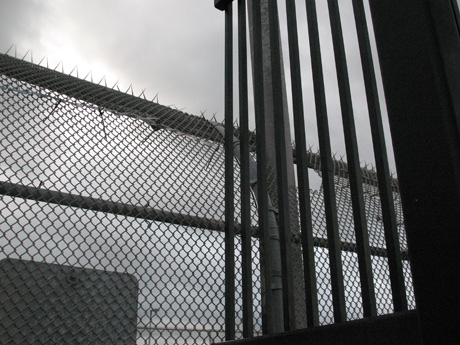
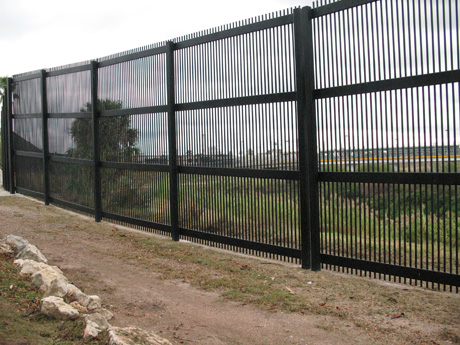
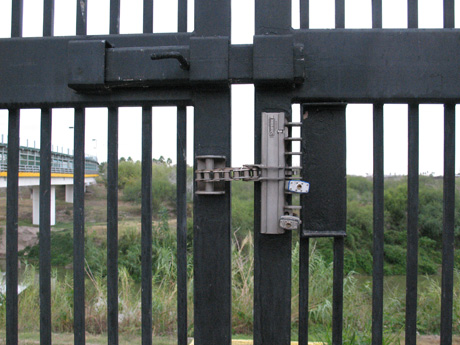
Recently, I stood in downtown Brownsville on a sliver of land ironically called "Hope Park." I read about how ferries used to cross the narrow stretch of the Rio Grande there, making it easier for the citizens of both nations to move unimpeded from one country to another. Instead, as I looked toward Mexico, there was a high fence of vertical bars in front of me, one of the more "attractive" versions of the wall, which varies in construction design from location to location (in some places it is just corrugated sheets of metal and in others it may be three consecutive physical barriers). "Hope," the celebration of a blended heritage and opportunity, had literally been fenced off from this wedge of land.
The border wall divides people of common culture and heritage, including not just Mexicans, but also Native Americans. Just to the west of Brownsville, is the town of El Calaboz, an indigenous community where Lipan Apache, Tlaxcalteca, Nahua, Comanche and Basque colonists have had extensive interactions since the Spanish colonial era. Margo Tamez, an assistant professor at the University of British Columbia - who holds a cross-appointment in indigenous studies and gender and women's studies - grew up there, learning the history of native oppression from her Lipan Apache elders.
Tamez, like Wise, views the wall as a physical symbol of oppression of peoples who are not white. Talking with Tamez, one gets a sense of the richness of her heritage and what a toll that squashing out diversity - instead of embracing it - takes. Tamez wants her lineage to be clear. She is a member of the Lipan Apache Band of Texas, or in their language, of the Konitsaaíí ndé ("Big Water Clan") and Cúelcahén ("Tall Grass People Clan"), the southernmost of the Athabascan peoples, who stretch from British Columbia to Tamaulipas and Coahuila, Mexico. The Athabascan peoples span three borders, as does their common culture.
Indigenous peoples along the Texas border wall were also the first peoples, according to Tamez, with whom the Spanish colonial government entered into land grants. Tamez's mother, Eloisa García Tamez (whose family was granted a plot in 1767 by Spain), is lead plaintiff in an ongoing lawsuit against the federal government claiming the wall's construction is a violation of Texas land law; Crown land grant and riparian laws; treaties among Lipan Apaches, Texas and the US; and international law.
Tamez told Truthout that the wall is representative of the "genealogy of hate and an entrenched worldview which is based upon contempt and disdain for indigenous peoples globally. The wall represents the legacy of that particular world view - a 'deathscape' which is a means of continuing to colonize through mechanization of cages and walls at a vast scale, and which demands its own existence through indigenous peoples' containment in open air prisons in our homelands, our traditional territories." Tamez maintains a web site about the Apache struggle for indigenous rights and lands in which she writes,"Apachean peoples still have a deep sense of being cloistered, imprisoned, contained, detained, and displaced in fractured ways by those visibly militarized architectural features on our territorial spaces."  
Lower Rio Grand Valley Is a Cage for Many
Indeed, the lower Rio Grand Valley is literally a cage for many. If you travel north by car on the only highway out of Brownsville, Route 77, after about an hour, you come to an immigration checkpoint. If you are undocumented, you will likely be apprehended here and deported, unless you have some foolproof, forged papers. If you are an American citizen (of brown skin color) and are suspected of being an "illegal alien," you may be searched and harassed. In short, without a passport or a driver's license, many residents of the lower Rio Grande Valley are trapped.

(For complete article... click).

Saturday, February 18, 2012

KEYSTONE EMINENT DOMAIN TARGETS COULD LEARN FROM INDIGNEOUS PEOPLES AND THE TEXAS-MEXICO BORDER WALL

A response to "Keystone Pipeline Sparks Property Rights Backlash," 2/17/2012, The Texas Tribune.

                                  Source: Todd Wiseman / Jay Root, The Texas Tribune.

It is an interesting twist of irony that the Keystone is shrink-wrapped as a "security" issue... and just one hair shy of being packaged and spun as a buffer/buttress against "terrorism." Indigenous Peoples of Konitsaaii Gokiyaa ('Lipan Home Land') have extensive experience and history with this 21st century phase of a longer history of dispossession, deception, and violent domination by those seeking only to serve the interests of the few.

It is important for those who are the targeted, as well as other critically involved actors, to consider the similar features of the discourses and rhetoric which the transnational and the state use to condemn these Texas property owners' lands, and compare them to the discourses and practices that the U.S. Department of Homeland Security used to condemn 70 miles of lands to construct the violent mega-project: the Border Wall on the Texas border.


There are important overlaps and intersections that should not be dismissed lightly, or artificially wrapped into a false rationale of "that is different because we have to protect our border against ____."  This is a dangerous fallacy.  The border wall could be incredibly useful analytical piece for white 'interior' property owners in this instance who are fighting a colossal battle to protect their rights and interests in land within Texas' territorial boundary, in competition against the desires and alleged 'rights' of a transnational, the elite U.S.-Canadian-Global 1-5% who will benefit, and the supposed "security" of the "nation." Consider the following:


In the case of the Texas-Mexico Border Wall, over 20 corporations have profited quite nicely on this immensely destructive project, which exploited the poverty and political marginalization of Indigenous peoples who are the original land owners, and whose title underlies and predates the U.S. and Texas for that matter. 

In that case, the majority of the impacted peoples hold legitimate Aboriginal Title (recognized by the UN Declaration on the Rights of Indigenous Peoples--which, btw, was endorsed by the United States last year), Crown Title, Treaties (for example, the wall infringes on the Lipan Apache Band of Texas' treaties with Spain, Mexico, Texas and the U.S.; and on the Treaty of Guadalupe Hidalgo).

The following statement should be critically re-examined, as it is a useful way to link the way the transnationals use the state to spin and to deploy the ax to constitutional rights beyond borders (scroll down to paragraph 8):


"He said the company already had 99 percent of the easements it needed for the Texas segment and was working on snapping up the remaining holdouts."


In 2007, 2008, and 2009, former US DHS Secretary Michael Chertoff used nearly identical discourses and rhetoric against property owners along the Texas border.  Indigenous peoples who had clear title to their lands vis-a-vis arrangements with the Spanish Crown; Hispanic and Latino private property owners many of whom had their land grant title confirmed by the first constitutional government of Texas; white farmers (mostly Euro-American emigrants to the region) whose properties had been in their families for 304 generations--were all condemned by the Secretary for the "security" and "protection" of the "nation."


As a result of the vehement resistance by Texas land owners against dispossession, (across race, class, religion, vocation, and different historical paths to land ownership--and dispossession...) the Secretary invented the mega waiver. Remember that?


Section 102 ('mega-waiver') was the provision which instrumentally voided 35 Federal Laws which effectively made it possible for big government to wipe out legal opposition, delay, and any possible relief to condemnation. This also obstructed the path towards remedy, redress, restitution, compensation...as well, which is one of the underlying pillars of the Lipan Apaches' 2009 petition to and hearing before the Inter-American Commission/Organization of American States--an ongoing investigation of the U.S. violations of international law and human rights conventions against Indigenous land owners. 

Who benefitted directly from the mega waivers and the expedited condemnations? The government contractor corporations, elected politicians, and elite private individuals whose interests they serve. They got millions expedited and into their bank accounts. 

Who benefitted from the construction jobs? Not locals. Other 'U.S. citizens' who the contractors imported from Other U.S. states and congressional districts, with the approval and complicity of Texas politicians. Remember, the many vehicles with Nebraska license plates which suddenly appeared out of thin air in 2009 and 2010 in Cameron County, Texas? Locals testified that it was as if an invasion of non-local and dominantly white 'supervisory' labor converged upon all the LRG Valley --and were highly 'visible' in local Mexican restaurants as an obvious non-local group?
 
The transnationals have profited quite nicely from the give-aways and gates that the majority Republicans opened for large scale dispossession in South Texas with mega-projects such as the Border Wall and the Keystone on the premise of "security." "Security" is used to rationalize the large-scale, overthrow of democratic constitutional rights--and Texas property law and ownership is the key 'test' in their laboratory. The most recent and yet hyper-censored dispossession in South Texas is related to the yellow-cake uranium exploration in Lipan Apache Traditional Territory.

Building wealth for the elite 1%, on the backs of Texas property owners--in fact, was designed and architected by Texas Senators Hutchinson and Cornyn, who have consistently produced legislation and the means for not only whittling away, but hacking away at Texas property rights for the "security" of the "nation." In fact, the 35 federal laws that were voided to construct the Border Wall in the Lower Rio Grande Valley, were never re-instated by President Obama, and Hutchinson and Cornyn have been instrumental in ensuring that it stays that way in perpetuity.


I think most folks, who do not have access to anything beyond the narrow confines of corporate-controlled television, radio, and mainstream 'news', should be offered more diverse tools to wrap their heads around these questions: whose nation? what "good" and for whose benefit? Whose "security"? Certain property owners in Texas are deemed as violable and rapable--as proven along the 18 foot tall Border Wall. The message of Manifest Destiny 'deep in the heart of Texas' was made explicitly clear by the majority of Texans (Republicans, conservative, white-streamed), that if you are Indigenous, a woman, an Elder, poor, a farmer, a pastoralist-subsistence herder, Catholic, refuse to assimilate and critically question the underlying rationale of the U.S. regime and goons of the transnationals, you are very likely to be severed of your land rights in the name of "security."


The best defense is a collective defense. Those currently targeted could save themselves a great amount of suffering and stress, and save themselves a huge amount of $$ and precious energy by studying the arguments against eminent domain, condemnation, and expedited taking ... as these played out in the LRG Valley. By studying the tactics and methods deployed by the government and corporations against land owners in the Lower Rio Grande Valley--and their push back--currently targeted peoples may be able to alter the debate. The pertinent documents are all available on the University of Texas School of Law website devoted to the cases. At http://www.utexas.edu/law/centers/humanrights/borderwall/


Don't be surprised if suddenly, all the properties along the path of the Keystone are suddenly found to be the "hiding places" of "terrorists", "drug lords", "cartels" and "potential threats" because that is the legal-moral framework that the government used to violently take the lands from Indigenous nations along the Lower Rio Grande Valley.


When I say 'violently' I mean that, when the collective action of hundreds of affected land owners organized significant resistance--refusing the government access to their lands-- the U.S. sent in armed personnel, used the presence of "boots on the ground", in the act of 'visiting' the property owners, one by one, in each community to enforce the taking of lands. Armed personnel (paid by U.S. tax payers) are used by the government to tell the targeted peoples that the constitution no longer exists in the targeted lands. Thank the Patriot Act for this reality--yea, it will eventually come after you, no matter what you thought your racial-religious-citizenship-geography protection buffer is/was. Now, folks along the Lower Rio Grande River and the Border Wall, are currently debating questions like this:


"It will be interesting to see if the dominant group--white Texans in the 'heartland'--and big ranchers’ voices are stronger--and if it will be decided that their property rights (perceived as inviolable and sacred)--are worth preserving. It will be interesting to see if the Texas dominant society will oppose the condemnation of those groups' lands. Why? Because in all their 'public opinions' of 2006 (Secure Fence Act, etc.) and 2007-2009 (during the construction of the Border Wall), they made it quite clear that it was 'OK" to use eminent domain to condemn the Aboriginal Title, Treaty Lands, Crown Grant lands, and individual private property of the low-income, Indigenous South Texans who lost land to eminent domain for the "security" of the "nation."


Perhaps the transnationals are now puncturing peoples' fragile conceptions of who is the 'enemy'?


Perhaps it would be an irony, if the most impoverished in Texas (not coincidentally all the counties of the Texas border are the highest poverty zones across the ENTIRE U.S....) though not without agency, put their vote with economic "security" ...

Afterall, that is what the transnationals have already counted on. Just as they calculated correctly that the majority of non-Indigenous peoples would not think, but rather would react to a barrage of anti-terror and 'security of the nation' jingoism which were key factors in the condemnations along the Texas border.

Interesting juncture, eh?


Finally, I wish to say a heartfelt 'good luck' to those whose lives are being destroyed by the Keystone-project which is connected to one of the most violent mass-scale destructive acts on our beautiful planet Earth. Decolonize Your Mind. If we are all going to go down due to the extreme disconnect, greed, selfishness, and self-absorption of the 1% and their 'end game', shall we not work to decolonize the borders of hate and isolation they have constructed, and instead, work collectively for dignity?


When will humanity (in Texas beyond borders) stand together, beyond differences, deception, corruption, the hate and isolation, the fictions, and dismantle completely this thoroughly violent and cannibalistic system?

Iinidii Ideeshch'il [There is Thunder; There is Lightning]

Thursday, February 9, 2012

TEXAS AND THE FEDERAL GOVT TARGET TEXAS BORDER COMMUNITIES AS STAGING GROUND FOR INTER-AMERICAN WAR: INDIGENOUS PEOPLES BEYOND BORDERS EXPENDABLE


Military Operation Architects in Partnership with the  'South Texan's Property Rights Association', whose members are included in photo with McCaffrey.   Photo Source: BR McCaffrey Associates LLC, at  http://www.mccaffreyassociates.com/pages/photos.htm, accessed February 9, 2011.

"I. PURPOSE
A: The Task In June 2011, Texas Department of Agriculture Commissioner Todd Staples requested that two senior military officers, Gen. Barry McCaffrey (Ret.) and Gen. Robert Scales (Ret.), develop and recommend a military-style strategy and operational and tactical requirements to secure the Texas portion of the U.S.-Mexico border. He also requested specific information related to the financial, manpower, technology and other resources needed to secure the Texas-Mexico border; and ways in which the roles and resources of U.S. federal agencies could be optimally deployed to facilitate implementation of these recommendations" (15).


"Texas Rangers Lead the Fight
 
The first principle of Texas border security operations is to empower local law enforcement. Soldiers often say that bad strategies cannot be salvaged by good tactics--- but bad tactics can defeat a good strategy. This saying simply reinforces the truism that no national strategy that seeks to defeat narco-terrorism can be adequately confronted unless tactical units, such as local police and federal border security stations, are properly staffed, resourced, competent and well-led.

"The Texas Rangers lead a cooperative program that brings together a ground, air and marine assault capability. Ranger Reconnaissance Teams are the tactical combat elements in the war against narco-terrorists. Each participating federal, state and local agency voluntarily adds its unique capabilities to the teams. The Texas Highway Patrol acts as an outer perimeter for the Rangers by funneling traffic toward Ranger border positions.


Tactical contact teams, deploying along the Rio Grande in small, concealed positions, are able to respond immediately to intelligence from Autonomous Surveillance Platform (ASP) units, DPS and National Guard surveillance helicopters, as well as calls to UCs from local police or citizens. DPS Dive Teams conduct SONAR scans of the Rio Grande and assist in recovery of vehicles and contraband in splashdown areas" (12-13).


LAW-Defense Commentary:
Not coincidentally, State and Federal military strategy on the so-called 'war on terror' will increase endangerment and suffering to humanity in the Texas-Mexico border region, many who are Indigenous peoples--not immigrants--of the region and the Americas.  

In the Texas-Mexico border region, it is racism, land dispossession, subjugation, exploitation effected through organized armed violence, militarization and militarism which have negatively affected  human suffering, disease, poverty, hunger, health,  biodiversity, and cultural revitalization.  The accumulative violent impacts of war and armed conflict has impacted Indigenous peoples which in the above scenario are abstracted and distorted as minor factors.  Once again, a resource war is being waged and Indigenous peoples are being crafted as 'suspects', 'expendables', and 'foreigners' in our own lands, and violence is key to the colonizers' war.   

The questions are who are the privileged 'local' decision-makers architecting the use of a military assault against the least privileged and most culturally, socially, economically, and legally disadvantaged communities along the Texas border?  And, who are the so-called 'local' interest groups colluding at the table with the State and Federal government to destroy lands, cultures, families, heritage, histories, and existences?   And, to what extent is their an entanglement or intersection between this war plan and uranium mining, oil extraction, water privatization, and mega-projects (border wall, highways, rail systems) in the region?  What are the social relations at the decision-making table?

Those responsible for the architecting of neo-ethnocide are enabling the U.S. and Texas military industrial complex to 'throw-away' the Indigenous communities along the Texas border deemed retrograde, 'savage', in the way of elites' development.  The use of massively organized violence, and the construction of Indigenous peoples as 'suspects', and as expendable in the war against Mother Earth, i.e. colonialist 'progress', is a genocidal movement. 


LAW-Defense denounces the "Texas Border Security: A Strategic Military Assessment."  It is the current-day extension of the Doctrine of Discovery and Manifest Destiny into the Lower Rio Grande Valley, and a revisiting of the massacres and removals experienced by our foreparents. It is a template for genocide.

LAW-Defense calls upon the Obama administration and U.S. Congress to uphold the U.N. Declaration on the Rights of Indigenous Peoples and Human Rights laws. 

LAW-Defense invokes the U.N. Declaration on the Rights of Indigenous Peoples, for the protection of humanity of the Texas-Mexico border region against neo-settler colonialism, militarism, and genocide. 

Monday, January 30, 2012

Letter of Protest to Valley Morning Star Article: "Ranches of Significance"


Dear Editor, Valley Morning Star

Ha’shi? Danzho. Warm greetings.

I am the daughter of hereditary Chiefly families of the Ndé, and the Hada’didla Ndé, related to the Cúelcahén Ndé, Nakaiyé Ndé and Suma Ndé through my maternal and paternal lineage. I am a direct lineal descendent of Lipan Apache Chiefly peoples, and the Chiefly peoples of the Moctezuma family with Crown Land Grant Titles made between Indigenous peoples and Spain. In American, this would be translated as: I am Lipan Apache, Jumano Apache, Tlaxcalteca, and Nahua, and Indigenous to the Traditional Territory of Konitsąąįį gokíyaa (Big Water Lipan Country).

Recently my mother mailed me a copy of the article entitled, “Ranches of Significance,” (Rio Living, Section D, January 22, 2012), because she wished to share the published list of the rancherías, ranchos, and comunidades which are relevant to our families’ long place-based and land-based history in the Texas-northeast Mexico region.

At first glance, I was hoping to be encouraged on the author’s emphasis on local heritage life ways of the Original Peoples, which are the underlying roots of South Texas cultures. The European immigrant and settler societies borrowed fundamental concepts and knowledge systems from Indigenous peoples of the entire South Texas-North-eastern Mexico region.

After beginning to read this article, unfortunately, I encountered a firm barrier which deeply impacted my reading of this article.
I am troubled by the continuation of a particular discursive pattern, one which has for too long saturated the settler society’s racist imaginary of Indigenous peoples of our homelands. I want to share my views of the negative characterizations of ‘Native Americans’ perpetuated in Mr. Rozeff’s article, and to comment with an Indigenous perspective about why I think it is cruel, harmful and wrong for this kind of bias to be published in popular, mainstream Texas media. 

I want to take this opportunity to provide critical feedback about the misinformation published in this article, and help the Editors gauge the diverse and critical consciousness of your readership. I also hope that this letter to the Editor will provide you a moment to re-think how race functions when minimally researched information is being provided to your readers as ‘facts’ and the harmful and indoctrinating role that public media plays in perpetuating racism against Native Americans-Indigenous peoples. I hope that my review comments will be used to educate your readers, and provide insights to your staff members.

An important misconception which circulates among the settler society in Texas, specifically South Texas, is that “Indians”, “Natives”, and “Native Americans” are ‘vanished’, ‘disappeared’, and in the ‘past.’ Nothing is further than the truth in South Texas, where indigenous peoples are a majority-minoritized population. Read ‘minoritized’ as colonized and subjugated. According to the National Congress of American Indians latest findings, Texas is #10, among all 50 U.S. States, for the highest number of Native Americans today, and growing every day. Over 250,000 persons of Native American heritage were counted in the 2010 Census data. (See “Census releases data on American Indian population,” at http://news.yahoo.com/census-releases-data-american-indian-population-205256402.html.) However, when Maya, Zapotec, Mixtec, Nahua, and numerous other Native American groups are figured, this would substantially increase Texas’ Native American population. However, state practices which lump all Native American people together in Texas as “Mexican”, “Hispanic” or “Latinos” works to mask the underlying reality.

This information is relevant to my critique, because it ensures that the readers of your paper get an 21st century, Indigenous perspective and critical view of an entrenched racial bias that continues to be circulated among settler societies and the media they control, thus furthering ideological objectives geared to hard-wire problematic views about “Native Americans” among the masses.
In his second paragraph, when he opened his article with large generalizations about Spain’s colonization of the (current-day) Lower Rio Grande and (current-day) northeastern Mexico, Mr Rozeff states: “Aggressive Native Americans were no longer a major problem to the primitive settlers.” This is a problematic in several ways. Today, it is considered an act of violence to use adjectives and qualifiers, grafted from 19th century texts and discourses, i.e. “aggressive”, next to “Native Americans.” This qualifier has been mass-produced and mass-circulated across many diverse mediums (films, pamphlets, comic books, postcards, advertisement, novels, news clippings, hate literature, etc.), and specifically attached to social and legal processes constructed to systematically destroy Native Americans in Texas. 

This discourse immediately instructs readers to adopt, uncritically, the anti-Indigenous racism, biases, ideas, and belief systems that are bound up in that qualifier, instructing readers to think about Indigenous peoples in narrowly conceived ways. It teaches the point of view of settlers, empires, nations, and developers who often used cultural, social, legal, and military force to remove, relocate, enslave, traffic, and subjugate Native American-Indigenous peoples into forced labour in institutions developed specifically to control the Indigenous land owners’ behaviours.
It is important to provide the Indigenous counter-history, perspective and up-to-date facts about the realities, not the Texas Cultural Myths. 

In the sentence, referring again to Native Americans, Rozeff alludes that Indigenous peoples “were no longer a problem.” In a sweeping generalization, Rozeff glazes over the literal and violent reality of complex processes whereby Indigenous diplomacy, broken agreements, deceptions, and extreme resistances against dispossession and roaming killing gangs led to numerous violent confrontations where Indigenous peoples were violently subjugated against our will and consent. 

The underlying reality, what Rozeff is so easily dismissing, is genocidal methods which were deployed by resource-hungry settler groups, individuals, and powerful elites who based their wealth on dispossession of Indigenous peoples’ traditional territory. Rozeff’s statements disguise genocide as an acceptable history and treatment of Native American Sovereigns, i.e. the Proprietary Title Holders, also known as Aboriginal Title holders in international law. Aboriginal Title is still a contentious issue, i.e. unresolved and ongoing, between the current-day lineal, hereditary descendants of aforementioned Aboriginal peoples who live all across each and every county in South Texas: the Ndé, anthropologically known as ‘Lipan Apaches.’

Furthermore, in the very same sentence , Rozeff refers to “the primitive settlers.” Thanks to the excellent development of critical and peer-reviewed investigations of South Texas’ Indigenous history and ongoing present, we know now that the majority of peoples receiving land grants from Spain (who Rozeff is so quick to racialize as “primitives” and so easily dislocates from indigenous place through use of “settlers”) were Indigenous peoples. Hereditary descendants of Chiefly Tlaxcalteca and Nahua peoples entered into Sovereign agreements, treaties, and ‘Grants” with the Spanish Sovereigns. The founding Indigenous Land Grant peoples comprised a highly complex society of Indigenous peoples who gained ‘rights’ to lands through a variety of legal measures. Three of these strategies for gaining land grant titles were through military service, conversion to Catholicism, and agricultural/ranching promises to work the lands granted. There is extensive literature about the Lipan Apache wars against the Tlaxcalteca and Nahua settlement in Tamaulipas, Coahuila, and Nuevo Leon, as well as South Texas—key battlegrounds of Lipan Apache homeland defense. Thus, a great majority of the so-called, alleged “primitives” and “settlers” with Crown Title grants, were in fact Tlaxcalteca, Nahua, Otomi, Purepecha, and diverse indigenous peoples who made and who their direct descendants have made immense contributions to South Texas society today. 

It is considered highly problematic in the United States and in international law to describe Indigenous peoples, and any group deemed as a ‘racial minority’ within a State as “primitive.” The discourse of the “primitive” has long been used through settler colonial regimes and societies to enact violence and to perpetuate ideologies of hate, oppression, marginalization, exploitation, and normalized poverty. South Texas is analyzed through this lens by numerous researchers globally.

It is unacceptable to allow this pernicious form of racism and oppression to be allowed to be published and disseminated broadly in mass media communication in South Texas, Texas, the U.S. and in the bi-national region. I think there more work could be done to examine how the values and misinformed perceptions of history as perpetuated by the colonizing groups’ descendants are deemed ‘fact’ and ‘scientific’, and automatically qualify to be ‘waived’ for any verification of fact or truth. 

This form of unverified ‘authenticity’ is one of the many ways in which non-Indigenous peoples carry out some of the tools of domination they carry around in their ‘knapsack’ of privilege. Without critical examination of the underlying structures which enable dehumanizing and racist writing, it is allowed to be ‘out-ed’ as ‘history’. This pattern and this article demands that I protest this form of Native American bashing, and this be disrupted.

Entrenched and normalized racism, discrimination, and criminalization of Indigenous Peoples in the Texas-Mexico border region is allowed to go without critical review, and without disruption causes deep and irreparable harm against Indigenous peoples in the Valley and South Texas who are forced to endure the banal ignorance of those who continue to minimize our massive contributions to world knowledge, world history, and hemispheric systems upon which everyone depends for daily sustenance. Our peoples, our cultures, our values, and our ongoing existences are not ‘folklore’, nor ‘myth’; we are not frozen in ‘ancient pasts’; we are not your grotesque spectacle and backdrops for settler society’s degrading notions of ‘cultural’ and ‘multicultural’ tourism, consumption and continuing theft and appropriation of our heritage—a complete knowledge system—not a ‘fiesta’.
The Native American-Indigenous peoples of South Texas and North-eastern Mexico are not ‘primitive’ fixtures and backdrops of the settler society’s privileged ‘heroic pioneer’ stories. The ‘pioneer’ legacy is an reality of violent disenfranchisement, colonization, and subjugation of the Aboriginal Title owners. When you gaze upon the massive impoverished communities along the border wall, remember, you are looking into the ongoing effects of the ‘pioneers’ racialized debasement of Native Americans ability to exercise our self-determination in the 21st century. 

Indigenous peoples of diverse heritage lineages are the majority population in the past and in the present of South Texas. However, settlers must still be educated by Indigenous peoples to use critical lenses to ‘see’ us without racist lenses and racist stories handed to you by the official histories of colonizing Texas Creation Myths. The majority of the so-called ‘Mexican’, ‘Mexican-American’, ‘Hispanic’, ‘Latinos’—as the settler society insists on naming us—are the Indigenous peoples who comprise the backbone of the LRG Valley and South Texas majority population. Indigenous peoples are still living in our original homelands, our land base at the fringes of economic, health, education, and political participation in controlling our destinies. This is the flip side of the legacy of settler pioneer society. Today, we are struggling to revitalize our cultures, values, spirituality, governance practices, community practices, and extended family institutions and Indigenous Knowledge Systems—regardless of the settler ideologies of imposed race.

Mr. Rozeff’s article put race at the center of the public mind-eye, and set the theme for this response to counter-narrate Rozeff’s “aggressive Native Americans” and “primitive settlers.” There are numerous other errors published in this article that deserve close and sustained public scrutiny and sustained criticism by all critical readers. The public of Texas and the Texas-Mexico transborder and transnational region deserves better, and deserves an open and respectful space to share community-based knowledge of local peoples’ Indigenous histories—and ongoing presence and present, which is a dynamic and exciting terrain of issues! However, when we as Indigenous peoples must continue to have to educate the settler society, by engaging this kind of ‘conquering history’—and refuse to be further marginalized, shut-down, silenced, shamed, and forced to swallow this kind of rhetoric –it only promotes a climate of fear, intimidation, and anger against the colonizers. My intention is to open up a space where deep learning, critical thinking, dialogue and a paradigm shift will occur.

It is my hope that my critique opens a community-wide dialogue about ongoing forms and modes of racism perpetrated against Native American peoples of the Americas in Texas. In our Ndé and Nahua languages, we have no real word for border or wall. We have to force our language to make new words to adapt to the ongoing violent dispossession waged against Indigenous peoples of the Lower Rio Grande and South Texas. We had to force our Indigenous mother tongues to create new words for ‘border’ and ‘wall.’ 

The Ndé are in a process of self-determination, land reclamation, cultural revitalization, and self-governance. It is likely that within our lifetimes, Texas will finally be held accountable in international law for a history of genocide committed against Indigenous peoples. It is likely in our lifetimes that Texas and the U.S. will be pressured to formally, officially and politically recognize the Aboriginal Title of Ndé peoples. 

History written by, with, for, and alongside Indigenous Peoples is an innovative site for building a different world view and framework that will provide a more secure, stable and prosperous society, economy, and multi-plural society with Indigenous peoples engaged in self-determination. 

Conquering history, written without Indigenous Peoples, and without an examination of colonization, dispossession, erasure, and structural violence, will only continue to sculpt and inscribe very painful and contentious divides between Indigenous peoples of the Lower Rio Grande Valley, South Texas, the transborder region ... and the colonizing settler society. 

Ahe’he’e, Gracias, Thank you.
Margo Tamez, Ph.D.
Member, Lipan Apache Band of Texas
Co-Founder, Lipan Apache Women Defense, El Calaboz Ranchería
Co-Founder, Emilio Institute for Indigenous Human Rights, El Calaboz Ranchería

Monday, December 19, 2011

O Holy Night, in Dine' ('Navajo') by Jana Mashonee and Silent Night in Apache

Indigenous Language Loss and Revitalization: While Nde' of South Texas and Lower Rio Grande River region have suffered irreparable harm related to language loss, and language revitalization efforts occur without the aid of Texas and the U.S.--historical oppressors--today, the effort to recuperate language is aided by inspiration derived from closely related indigenous peoples with historical ties to Nde of Texas.

Texas (and Northeastern Mexico) is the traditional homeland and customary territory of Southern Nde' Peoples, who are close cultural relatives of Navajo, Western and Eastern Apache, and Dene peoples of North America, inclusive to northeastern Mexico.

Indigenous Peoples have the right to practice, speak, learn in, read, and to be educated in our mother tongues. Though our mother tongues have been forcefully stolen from us, through the assimilative violence of states and colonizing laws, today, thanks to the decades of hard work at the international level, Indigenous Peoples have rights--globally and at the local level (that means in the country, state, province in which we reside)-- to revitalize and recover what has been stolen and lost through no fault of our own.

Today, States have a duty and responsibility to change assimilative laws and practices, and to provide economic, social, and political aid to ensure that Indigenous Peoples in their respective bounded areas are protected from further cultural harm and must aid in the processes to support Indigenous Peoples to speak, read, and learn in our own languages.

Texas has been historically severely resistant to breaking from its oppressive and subjugating political, economic, and social systems as they affect Lipan Apaches and many indigenous peoples in the state.

Lipan Apaches continue to work systematically for self-determination and to break the violent chains of non recognition, internal colonization, and 4th World status in our own homeland Konitsaahii gokiyaa.


O Holy Night (Written in Navajo)
Hodiyin tł’ée’go Sǫ’ bee da’dinnídíingo Áko Yisdá’iiníiłii bi’dizhchį́ Diné ti’dahooníhę́ę baazhníyáago Bijéí biyi’di haa bił dahóózhǫǫd ’Áádóó ch’ééh deeskai yę́ę bił nídahoozhǫǫd Háálá chohoo’̨́ bee ’adideezdláád Yaa ’ádaahnééh diyingo nidaal’a’í ’Éí deísółts’ą́ą́’! Christ yizhchį́ yaa dahalne’ Hodiyin tł’éego Christ ’éí bi’dizhchį́!

Enjoy this beautiful example of indigenous language empowerment and self-determination!

Gozhoo (In beauty)

Sunday, December 18, 2011

U.S. OFFICIAL 'APOLOGY' TO NATIVE AMERICANS, "A SORRY SAGA OR FIRST STEP?"

Without Procedures for Redress and Restitution, Obama's 'Apology' to Native Americans for Historical and Contemporary Harms is Severely Insufficient to Address Genocide Histories and Realities Involved in the Necessary Process Related to Supporting the Recovery, Recuperation and Self-Determination of Indigenous Peoples in Texas and the Confluent Texas-Mexico Indigenous Border(ed) Region.


Commentary excerpted from:

Fourth World Eye

A Sorry Saga or a First Step?

, 2010 by
An article recently surfaced in Indian Country Today entitled “A Sorry Saga,” in which the author brings attention to the Native American Apology Resolution signed by President Obama on December 19th, as part of a defense appropriation spending bill. While the Resolution had passed as a stand-alone piece of legislation in the Senate, it was attached to and passed with a defense appropriations spending bill within the House before making its way to President Obama. The final version of the resolution shifted from being an official apology from the US government to an apology “on behalf of the people of the United States to all Native peoples for the many instances of violence, maltreatment, and neglect inflicted on Native peoples by citizens of the United States.” The real crux of the Indian Country Today article revolves around the lack of publicity surrounding the apology and asks the question, “Is an apology that’s not said out loud really an apology?”

Prior to this apology, President Obama has been largely lauded for keeping his prior commitments to Indian Country (convening a tribal leaders summit in November to hear concerns; appointing tribal leaders to IHS and Native American Affairs posts; largely maintaining and even, in some cases, increasing funding to Indian Country for this year’s budget). Ironically, it is this hidden apology that has caused some to backpeddle their vocal support for the Obama Administration. I would argue that many may view this obscure and amalgamous apology as a step backward rather than forward as it provides the perfect metaphor for the US’ longstanding nebulous public policy toward American Indian people. The US, throughout the years, has managed to promote a half in half out relationship with Indian Country in which sovereignty is recognized in pieces rather than in whole (as a long-standing continuation of the Western colonial reductionist vein of thought that brought us the Dawes Act, etc). Thus this apology, passed with no public acknowledgement, coming from the “American people” rather than the US government, and with a caveat to ensure that it cannot be construed to allow legal culpability, reeks of this prior paradigm that many in Indian Country counted would change and were hoping was changing with the election of President Obama.

Revisiting Indian Country Today’s question, I would propose what I believe to be a more pertinent question: Is an apology without subsequent action really an apology? A true apology, publicized or not, must be followed by real demonstrable action that marriages sentiments to words, words to policy, and policy to action. I laud this apology as long as it is a step toward such action. A relevant and pressing issue of substance is the current US stance against the United Nations Declaration on the Rights of Indigenous Peoples (UNDRIP). In 2007, the US, along with Canada, New Zealand, and Australia, were the only countries to vote against the adoption of the UNDRIP. Australia has since overturned their decision in early 2009 and did so only two months after their official governmental apology to the Aboriginal populations. A true test then of the intent of the Native American Apology Resolution will be if the Obama Administration utilizes this apology as a foothold for reversing the current US position opposing the UNDRIP. Such an adoption would truly demonstrate President Obama’s commitment to and respect for Indian Nations and for creating a new paradigm in which true nation to nation relations can begin.